YouTube Monetization Not Working? Here Are 5 Real Alternatives in 2026
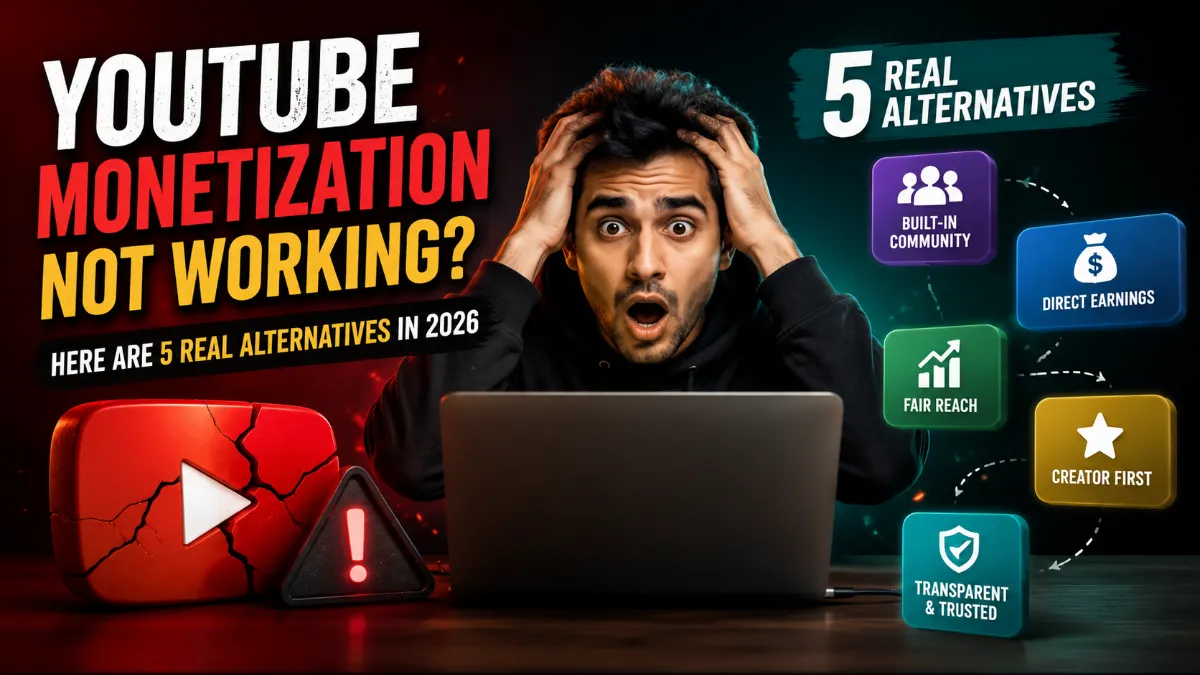
YouTube Monetization Not Working? Here Are 5 Real Alternatives in 2026
Every day, thousands of creators upload their first video with one dream — to eventually get paid for their work. And every day, thousands of those same creators hit the same wall: YouTube's Partner Program requires 1,000 subscribers and 4,000 watch hours before you see a single dollar from ads. For most people, that wall doesn't come down for months, sometimes years.
This isn't a personal failure. It's a structural problem. And in 2026, there are real ways around it.
Why Does YouTube Have Such a High Monetization Bar?
YouTube's 1,000 subscriber requirement exists because the platform uses advertiser money to pay creators. Advertisers want reach, and YouTube needs to guarantee that the channels they're paying for have a real, consistent audience. A channel with 50 subscribers doesn't give advertisers confidence — so YouTube doesn't pay it.
That logic makes sense for YouTube's business. It doesn't make sense for creators who are genuinely building something but haven't crossed that threshold yet.
The result? A massive gap — talented creators producing real content, with no way to earn while they grow.
What Happens to Creators Who Don't Qualify?
Most give up. Research consistently shows that the majority of YouTube channels stop posting within the first 6 months — not because the content was bad, but because creating without any financial signal feels pointless. You're spending time, money on equipment, energy on editing — and receiving nothing back.
The ones who do push through usually do it by finding income outside YouTube: brand deals (only possible once you have visible follower counts), digital products, or simply waiting and hoping the algorithm eventually notices them.
Neither of these is a great answer for someone just starting out.
5 Real Alternatives for Creators Who Can't Wait
1. Platforms With Lower Monetization Thresholds
Several video platforms have deliberately set lower entry bars to attract the creators YouTube locks out. Some allow monetization from as few as 50 subscribers — a number most creators can realistically reach within their first few weeks. The trade-off is smaller overall audiences, but the early financial validation keeps creators motivated enough to keep going.
2. Fan Funding Platforms
Platforms like Patreon, Ko-fi, and Buy Me a Coffee let your audience support you directly — no subscriber count requirement, no watch hour minimum. If even 10 people genuinely value your content and pay $5 a month, that's $50 recurring income before you hit 100 subscribers anywhere. Small, but real.
3. Affiliate Marketing (From Day One)
You don't need to be monetized to earn affiliate income. If your content reviews products, recommends tools, or exists in a niche where people make purchasing decisions, affiliate links work regardless of your subscriber count. Amazon Associates, Impact, and most SaaS companies have affiliate programs open to creators of any size.
4. Shorts + Long-Form Hybrid Strategy
YouTube Shorts now has a lower effective threshold for monetization signals — not because the payout is higher, but because Shorts reach new audiences faster than long-form videos. Creators who pair short viral-format content with longer monetized videos often hit the 1,000 subscriber mark in half the time. This isn't a monetization alternative — it's a faster path to YouTube's own gate.
5. Licensing Your Content
If your content is original — original music, original footage, educational material — platforms like Pond5, Shutterstock Contributor, or even direct licensing to media companies can generate income completely independent of your subscriber count. One well-shot clip or original track can earn more than months of ad revenue on a small channel.
The Real Question to Ask
Before choosing any of these paths, ask yourself one thing: do you need income now, or do you need validation now?
These are different problems. If it's income — fan funding and affiliate marketing work immediately. If it's validation — a platform with a lower monetization threshold can give you that first "you earned something" moment that makes the next 6 months of creating feel worthwhile.
Most creators who burn out do so not because they ran out of ideas, but because they ran out of reasons to keep going. Early monetization — even small, even symbolic — changes that equation.
A Note on Platforms Entering This Space
The gap YouTube has created is not going unnoticed. A growing number of creator-first platforms are building directly around the problem of early-stage monetization — lower subscriber thresholds, community-based discovery, and reward systems that recognize effort before reach. This space is actively evolving in 2026, and creators who explore it now are getting in early.
The advice is simple: don't wait for YouTube's permission to start earning. The options are there. The ones who find them early are the ones who are still creating two years from now.